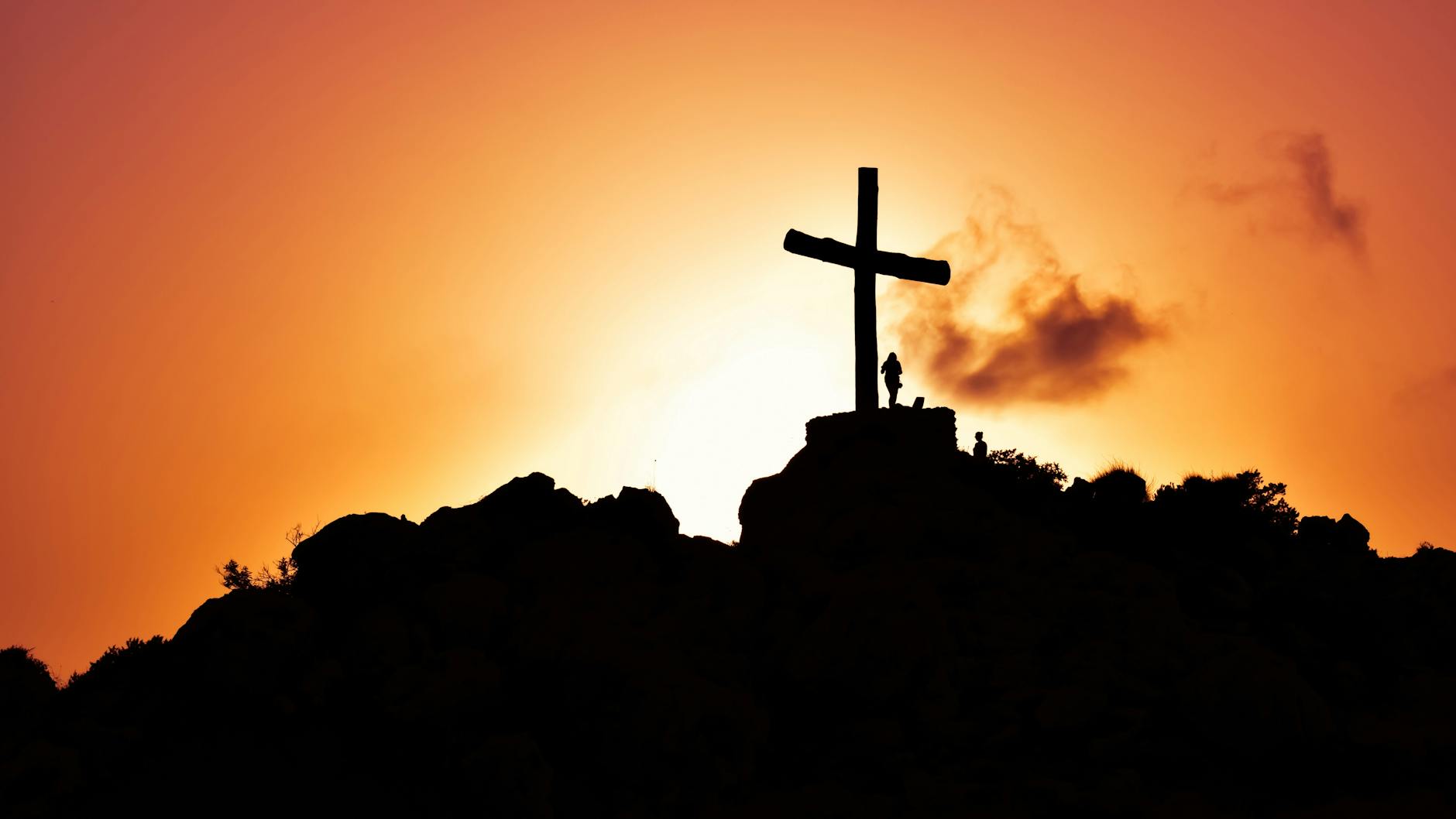
There are two events that most Christians are always looking forward to celebrating or commemorating each year: Christmas and Holy Week. Although there are debates among well-meaning believers on why we should or should not celebrate them, for us here at The Fit Stewards, we believe that the Lord looks at the motives of the heart. We celebrate Christ’s birth and resurrection, because they are the evidence of the fulfilment of God’s redemption plan for mankind.
Celebrating Holy Week is a great time of reflection, especially in the Philippines. I am not sure if it is just nostalgia, or the atmosphere just feels a little extra “holy” even though the date of celebration changes each year. It really draws me to my knees, and makes me ponder on the things Christ taught us during those fateful days leading to His crucifixion and resurrection. There are just so many, but let me just share some of them below.
Palm Sunday
In John 12:13, we read about the triumphal entry of Jesus to Jerusalem. Riding on a donkey, as was prophesied, in Zechariah 9: 9, “… your king is coming to you; righteous and having salvation is he, humble and mounted on a donkey, on a colt, the foal of a donkey.” People welcomed Him, waving palm branches, rejoicing, and shouting “Hosanna! Blessed is He who comes in the Name of the Lord!” It was a joyful start of the week, which will end in a seemingly dreadful one.
What we learned from Jesus here is humility, and it’s not only because he rode on a donkey, instead of a stallion, which is better fit for a king. His humility lies in the fact that though He knew how everything will end, He was willing, determined even, to go through the whole process. His entry was foretold, and it was fulfilled as it was written. He did not shy from His calling, but accepted it wholeheartedly. He allowed the people to express their praise, because what they saw in Him was not His person, but the glory of the Father in Him.
Holy Monday
On that day, Jesus went to the temple and saw something revolting. There, He saw His people, both the laypeople and the workers of the temple doing business. He was utterly disappointed with what He witnessed. In His righteous anger, He started overturning tables and said: ‘MY HOUSE WILL BE CALLED A HOUSE OF PRAYER’; but you are making it a DEN OF ROBBERS.” (Matthew 21:13 NASB)
Like the temple-cleansing, Jesus also cleanses us once He enters our hearts. It happens when we acknowledge our sins, repent, and accept Him as our Lord and Savior. This act will make us clean in the eyes of God. However, as we remain in this world, He will work inside us to make us practically righteous so that the world will see His glory in us and draw them to Him.
Let us all examine the “temple,” which is our bodies. For those of us who believe, Jesus, through the Holy Spirit, resides in our hearts. When He inspects us, what will He see? Are we a “house of prayer”? Or have we been robbing God of our time, talents, and resources? Are we focused more on the eternal or temporal? Do we do what we do because it pleases God, or are we just practising “holiness” to avoid feeling guilty?
Holy Tuesday
Jesus cursed a fig tree that did not bear fruit. The day after, they found the tree withered, and they were amazed. They wondered and asked what happened? To this, Jesus replied: “Truly I say to you, if you have faith and do not doubt, you will not only do what was done to the fig tree, but even if you say to this mountain, ‘Be taken up and cast into the sea,’ it will happen. And whatever you ask in prayer, believing, you will receive it all.” (Matthew 21:21-22 NASB)
Here, Jesus is telling us that faith can do so much for us, but that faith must be placed on Someone truly reliable. Our God has shown us how faithful He is. This is our confidence that whatever He says, it will come true. We know that He always delivers on His promises. So, we can count on them to see us through every situation. God is generous. He gives all that we need. God also loves to be with us and to commune with us. That is why, He wants us to learn to ask and believe.
When we ask in accordance with His will, He will surely give it. When we ask in faith, He will answer. He will never turn a deaf ear to us. He always listens and He will always do something. Expect His answer to your prayers. Wait in expectation for what He would do.
Asking is so important that Jesus ensured that this is one of the principles He left behind as He will soon face crucifixion towards the end of the week. It is something He wants all of us to understand and practice.
Holy Wednesday
If there is one person who showed lavish love for Jesus, it was the woman with an alabaster jar who came to wash Jesus’ feet with her tears, two days before His crucifixion. She also broke a jar of perfume, which many scholars claim to be something precious to Jewish women at that time because it was reserved to be given to their groom before they got married. Thus, this act is not just the surrender of wealth, but also a surrender of her future as a wife and a mother.
Though the people around her criticised what she did, Jesus praised her and said that this exhibition of love would be immortalised, “Truly I say to you, wherever this gospel is preached in the whole world, what this woman has done will also be told in memory of her.” (Matthew 26:13 NASB).
We can never love as Jesus does, but in our way, we can express it, and He will gladly accept it. And though we cannot serve Jesus as the woman did, God taught us that the best way to show that we love Him today is to love the people around us.
Love is action. It cannot be kept a secret. It must be felt and experienced to ultimately give God the glory. Being able to love those who cannot love us back shows the power God has in our lives. He allows us to do something only He can. We are, in a way, expressing the same kind of love that drove Jesus to the Cross. A love that does not expect anything in return. A love that is incomprehensible. A love that can only be from Him.
Maundy Thursday
Jesus was always praying to the Father. That night before He went to the Cross, He prayed for the cup to be taken from Him. Yes, being 100% human, He knew how difficult the next hours would be. He prayed not to have to go through it, but did not insist on what He wanted. In the end, He said, “not my will, but as You will.” (Matthew 26:39 NASB)
We often hear people claim that God does not answer their prayers. Is it true? Are “answered prayers” only those that went the way we wanted them to? Jesus was not spared from drinking the cup of the wrath of God. He drank it so that humanity will be spared of the judgement our sins deserve. Jesus did not get what He asked for, but He knew that it was God’s answer to His prayer. It has to happen because it will serve a greater and more meaningful purpose. Drinking the cup will save humanity, and will reconcile us back to God.
At times, God’s answers to our prayers are not what we expect, but always remember that His omniscience allows Him to know far beyond the here and now. He allows what is most beneficial. His love will permit us to go through temporary difficulties and challenges, in exchange for a more rewarding future, both here and in eternity. We only have to trust and surrender. We only have to learn to say, “not my will, but Yours, be done.”
Good Friday
“It is finished.” (John 19:30 NASB)
We often read or hear these words on Good Friday, but what does this really mean?
God sent Jesus to the world to pay the debt that we cannot pay. We all have a sin problem, and that makes us all deserving of hell. Yet, because of God’s love, He sent His only begotten Son to pay the price of redemption.
But on a practical level, do you know what else that sacrificial act accomplished? It enabled us to have free access to the Father, 24/7! We may not appreciate it much because we have been so used to it. Whenever we want to talk to God, we may do so, anytime, anywhere. And that is only possible because Jesus finished the work.
Before the Cross, they had to offer animal sacrifices once a year. They needed an unblemished lamb to offer so that the sin of the nation will be atoned for. They needed a high priest to intercede for them. Only one person can go, and he must be “worthy” enough to go beyond the veil so that he and his offering, on behalf of the people, will be accepted. Imagine having to still do that today. Think about not being able to constantly run to God when we need to. Imagine not being able to call God our Father.
We have so many reasons to be grateful for what Jesus did on that Good Friday. We are enjoying eternity now, because He died and paid for our sins and spared us of eternal death.
Holy Saturday
And then there was silence.
As the Jews observed the Sabbath, Jesus laid in a tomb. He was there. Pilate ensured that when he said, “You have a guard; go, make it as secure as you know how.” (Matthew 27:65 NASB
They may have thought that they were ensuring no one steals Jesus’ body, but their act only added to the proof that He was there the entire time. It was impossible for anyone to have done anything because the Roman guards are known for their excellence in their job.
There are times when we question God about His ways because we just could not understand them. We tend to think that we are defeated, because there seems to be nothing else we can do. We feel hopeless, and helpless. But we must always remember that God can make a way when there seems to be no way, as the song goes. At times, that moment of seeming defeat is like a diving platform. A spring that will launch us to greater heights. An event that will result in God’s greater glory. We only have to trust. We only have to wait. Who knows, tomorrow might be the day for the breakthrough we have been waiting for?
Resurrection Sunday
“He is not here, for He has risen, just as He said. Come, see the place where He was lying.” Matthew 28:6 NASB
Just as He said.
How powerful that phrase is! It claims that Jesus knew all along. It tells us that Jesus was never a victim of circumstances. He knew that everything that happened during that fateful week would happen, and He went along with it, pushing the redemption plan of God forward. He accepted the command of the Father because He knew what it would accomplish. He had and will always have all things under His control for He is sovereign!
Rising to life made Him defeat sin and death. He is the unblemished lamb sacrificed to cover all our sins: past, present, and future. He has become our High Priest, who enables us to have confidence to come to the Father. And when He went back to the Father, He sent the Holy Spirit so that we will never be on our own. From God with us, He became God in us.
If Jesus did not rise from the dead, then all of us are doomed. The resurrection part is most crucial in our salvation. Because He lives, we know that we will also live. As this once again fulfils Scripture, we become more confident in the truthfulness of God. It makes us anticipate the completion of the rest of His countless promises. In joyful expectation, we are now waiting for that final event: His certain return to bring us back to His eternal kingdom.
Wrap Up
There are so many things that happened during that point in time. We are barely scratching the surface with these simple reflections of what we can learn from that first Holy Week. But that’s alright. We don’t need to wait for this occasion just to meditate. Every single day, we can learn something new from the Lord, and we will never run out of wonderful truths to discover about Him and His Word, until the end of our earthly lives and even throughout eternity.
 The Fit Stewards